
Automation with control
Automating does not mean taking people out of the process. It means deciding in which cases they come in.

When people talk about automating a decision, the conversation tends to get stuck between two extremes: either the machine decides everything, or a person confirms everything the machine does. The first is frightening, and rightly so. The second saves no work at all.
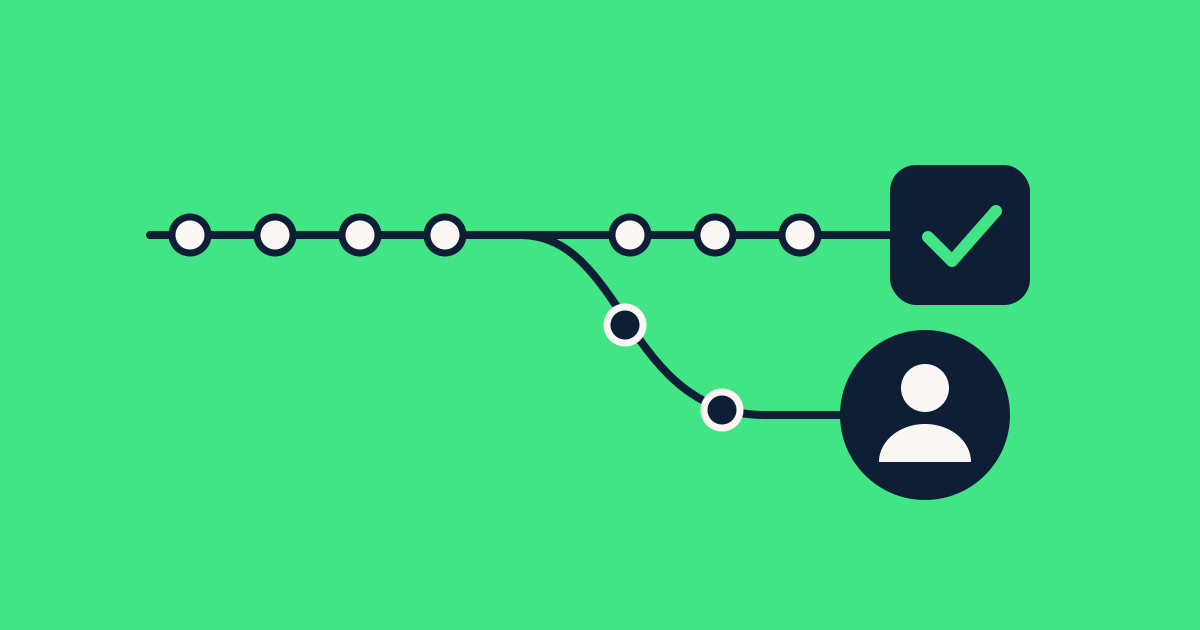
What works in practice sits in the middle and has a simple design: the system decides the clear cases and hands the others to a person.
Not all cases are alike
In almost every repetitive process, most cases are easy. The document is complete, the figures add up, nothing looks odd. A smaller share is hard: information is missing, the image is poor, the case fits no rule.
A person spends the same initial care on both, because they only know a case was easy after looking at it. A well-designed system does that triage: it settles the easy ones and flags the hard ones. The team stops looking at everything and starts looking at what really needs to be seen.
Three rules for the design
The system must be able to say “I don’t know”. A system that always answers with the same confidence is dangerous, because the mistakes come mixed in with the correct answers. One that decides fewer cases on its own and gets nearly all of them right is better.
Every decision carries its reason. “Rejected” is not enough. “Rejected because the date is outside the period” lets whoever receives the answer accept it or dispute it, and lets the team see where the system fails.
The reviewer must be able to disagree. If review comes down to pressing “confirm”, it is no longer review. The reviewer needs to see the original case, the system’s proposal and the reason, and to have an easy way of deciding something else.
Review improves the system
One benefit only shows up with time. Every case a person corrects shows where the system still fails. If those corrections are recorded, patterns appear: a type of document that always goes wrong, a rule nobody had written down.
That way, the share of cases that needs review tends to shrink, without anyone having decreed that the machine should be trusted more. It is trusted more because there is evidence.
Where to start
Start with the system deciding few cases on its own and sending many to review. Measure how often the person agrees with the proposal. Where they nearly always agree, let the system decide. Where they do not, keep the review and find out why.
It is slower than switching everything on the first day. It is also the only way to know, at each step, how far you can trust what you have built.